Crispy Spring Rolls
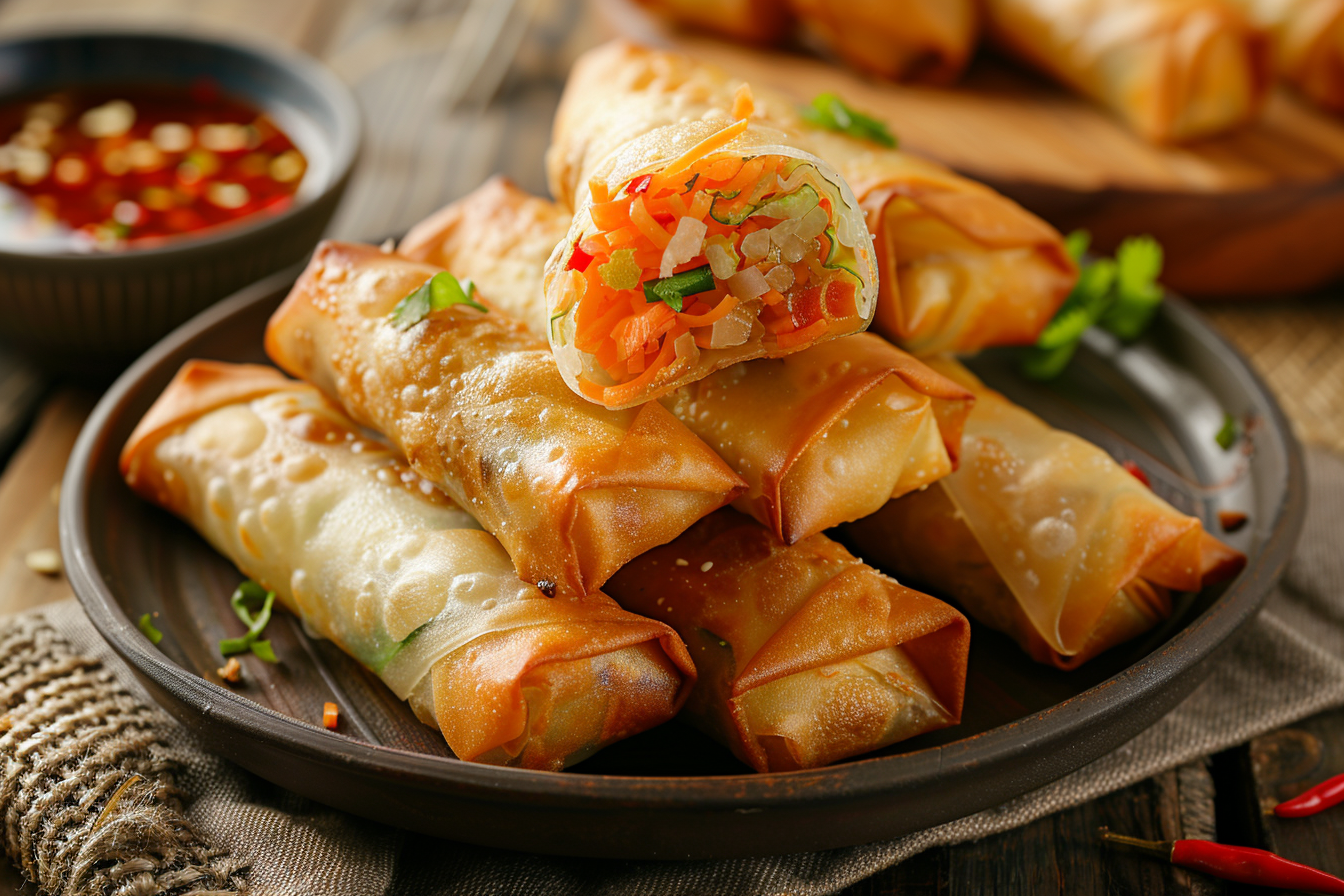
Golden brown fried rolls with a crisp vegetable filling and a flaky, crunchy shell.
- Preparation
- 35 min
- Cook/bake time
- 20 min
- Total
- 55 min
- Difficulty
- Medium
- Calories
Golden brown fried rolls with a crisp vegetable filling and a flaky, crunchy shell.
Golden brown fried rolls with a crisp vegetable filling and a flaky, crunchy shell. For them to become truly crispy, the filling must be completely cooled before rolling, because warm steam inside softens the dough from the inside. Perfect as an appetizer, for parties, or as finger food for a TV night.
Warm filling releases steam, and it has no way out in the closed roll. It condenses on the inside of the dough and softens it long before the roll sees the fat. When frying, this water then evaporates suddenly and bursts the shell. Cold filling does not have this steam, so cooling is not a game of patience, but the actual work step.
Heat one tablespoon of oil in a wok over high heat and first sauté the Shiitake and carrots for two minutes. Then add the white cabbage and garlic and fry for another two minutes until the cabbage just wilts. Finally, fold in the sprouts, glass noodles, and scallions, and season with soy sauce, sesame oil, and white pepper. The vegetables should retain a distinct bite, because they will continue to cook while frying.
Spread the filling on a large plate or baking sheet and let it cool completely, ideally for thirty minutes. Pour off any liquid that forms. This step is not optional: warm or moist filling creates steam inside during frying, and that inevitably makes the roll soft and soggy.
Place a dough sheet in front of you as a diamond and put two tablespoons of filling on the lower third. Fold the bottom corner over the filling and roll it up tightly once. Now fold both sides tightly inwards and continue rolling the roll up to the top corner. Brush the last corner with the flour paste and press it firmly. Rolling tightly is important, because air pockets will cause the roll to burst open during frying.
Heat the oil to 170 °C. Fry four to five rolls at a time for about four minutes until golden brown, turning them once so they get an even color all around. If you add too many at once, the temperature drops and the rolls soak up oil. Remove them with a slotted spoon.
Place the finished rolls on a wire rack so the air can circulate from all sides. On paper towels, the underside would become soft in its own steam. Let them rest for two minutes, because the filling is very hot inside. Serve them with sweet chili sauce or a dip made of soy sauce and rice vinegar.
Fry 200 g of ground pork at the beginning, then the rolls will be much more filling.
Brush the rolls with oil and bake at 200 °C convection for 20 minutes, turning halfway through. Less flaky, but lighter.
| Calories | 386 kcal |
|---|---|
| Protein | 8 g |
| Carbohydrates | 44 g |
| – of which sugar | 5 g |
| Fat | 19 g |
| Fiber | 4 g |
Summer rolls are rolled with rice paper and eaten raw. Spring rolls use a wheat dough and are fried.
Yes. Once rolled, they will keep covered for three hours in the refrigerator or two months in the freezer.
Usually there is too much filling inside or they were rolled too loosely. Two tablespoons per sheet are enough, and work really tightly when rolling.
Sign in to rate and comment on this recipe.
Fabian Bode
23. Juli 2026
Die Ofenvariante funktioniert erstaunlich gut, wenn man das Frittieren scheut.
Louise Barlow
20. Juli 2026
Tasty. Mine leaked a bit, I clearly overfilled them.
Kilian Schulz
14. Juli 2026
Wirklich knusprig! Ich hatte die Füllung vorher immer warm eingerollt, jetzt weiß ich warum es nie geklappt hat.
Here some of the ingredients never reach the plate: most frying oil stays in the pan, and in a stock the solids are strained off. How much of it ends up in the food cannot be calculated – counting a litre of oil would quintuple the figure, leaving it out would describe a dish baked without fat. So this is an editorial estimate rather than a total that would look dependable without being so.
A guide value, not a lab measurement: no two onions weigh the same, and fat content varies from pack to pack.