Homemade Gluten-Free Pasta
Without gluten, the dough lacks elasticity. Hot water instead of egg solves this because it gelatinizes the starch.
- Preparation
- 30 min
- Cook/bake time
- 4 min
- Total
- 1 hr 4 min
- Difficulty
- Advanced
- Calories
Without gluten, the dough lacks elasticity. Hot water instead of egg solves this because it gelatinizes the starch. A gluten-free pasta dough cannot be stretched, only pressed. The solution is a scalded dough. Boiling water causes some of the starch to gelatinize, and this paste takes over the role usually played by gluten.
Why this works
In wheat dough, kneading creates a gluten network that makes the dough elastic and holds the noodle together during cooking. Gluten-free flours do not have this network, and that is why the dough breaks when rolled out. The trick is a scalded dough. Boiling hot water causes some of the starch to gelatinize. The starch granules burst open and release long molecular chains that act like an adhesive. This paste makes the dough pliable and holds it together. Xanthan gum further enhances the effect because it is a thickener that binds water and provides elasticity even in the smallest amounts. The resting time is also mandatory here, but for a different reason than with wheat dough. It gives the starch time to absorb the water evenly.
Step-by-step instructions
- 1
Mix the flours
Thoroughly mix the rice flour, cornstarch, tapioca starch, xanthan gum, and salt. Xanthan gum works even in tiny amounts and must be distributed really evenly. A lump will turn into a rubbery spot in the dough.
- 2
Scald with boiling water
Pour the boiling water over the flour mixture and stir immediately with a spoon. The mixture will become lumpy and hot. This is the scalded dough, and this is exactly where the starch gelatinizes and takes over the role of gluten. Let it cool for five minutes.
- 3
Incorporate eggs and knead
Incorporate the eggs and oil and knead the dough for five minutes until it is smooth and pliable. It feels different from wheat dough. It is firmer, less elastic, but not crumbly. If it is too dry, a tablespoon of warm water will help.
- 4
Let rest for thirty minutes
Wrap the dough tightly in plastic wrap and let it rest for thirty minutes. Unlike wheat dough, this is not about relaxing the gluten, but about the starch absorbing the water evenly. Without this time, the dough will tear when rolled out.
- 5
Roll out and cook
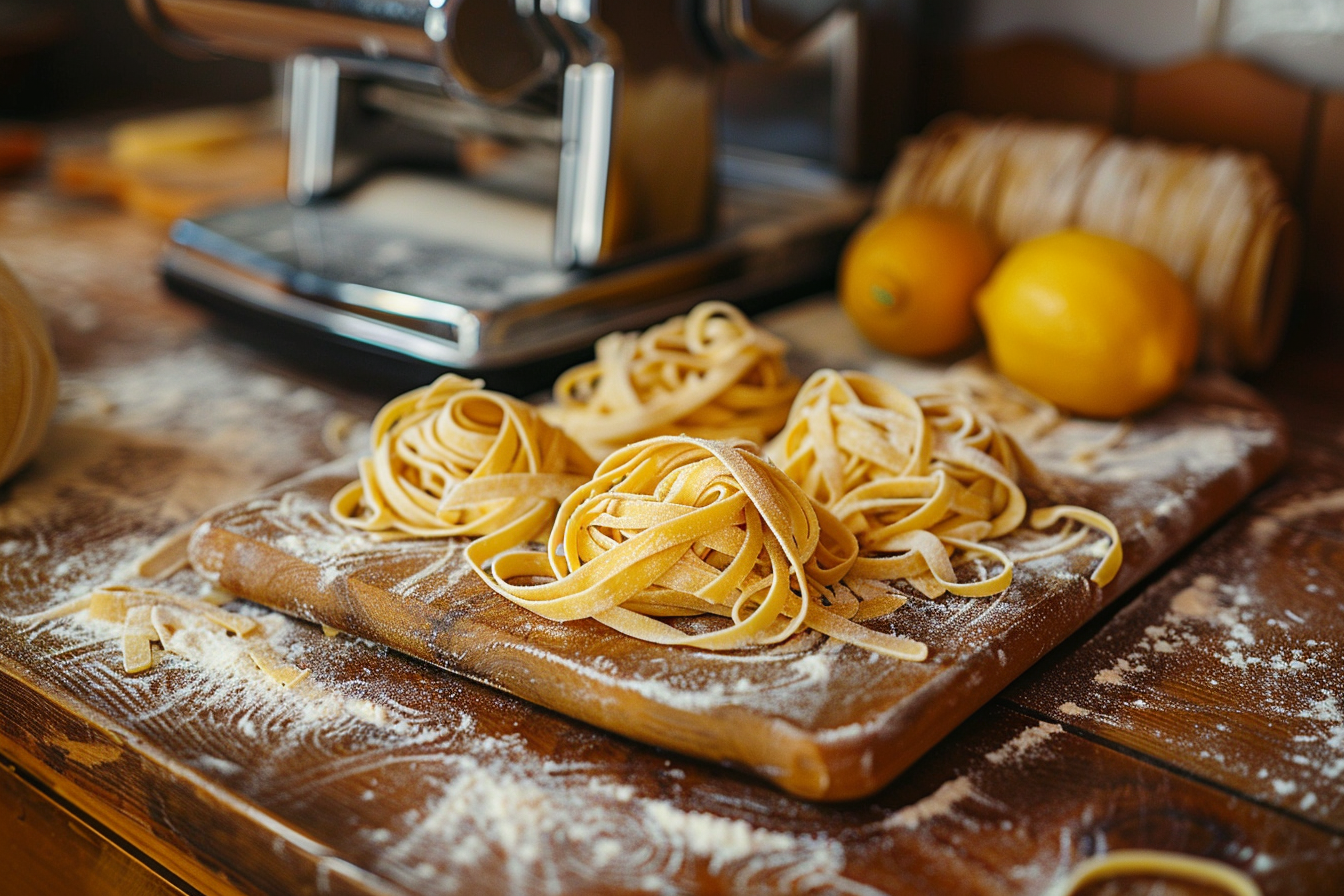
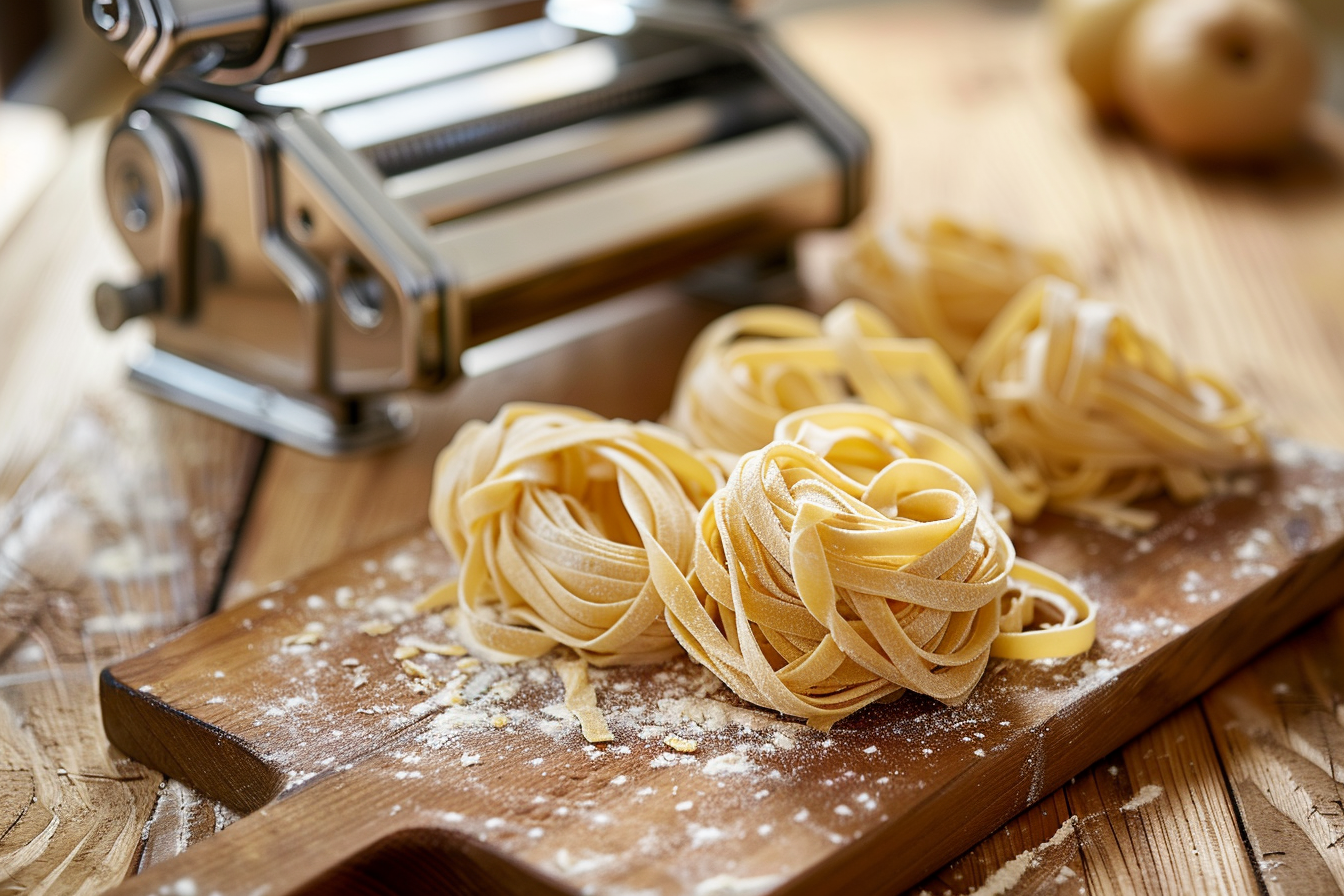
Roll out the dough between two layers of parchment paper or in the pasta machine up to the middle setting. Thinner than that, it will tear. Dust generously with rice flour and cut into ribbons. Cook in boiling salted water for three to four minutes, then drain immediately. Gluten-free noodles have no reserve and become too soft in a minute.