Jiaozi for the New Year
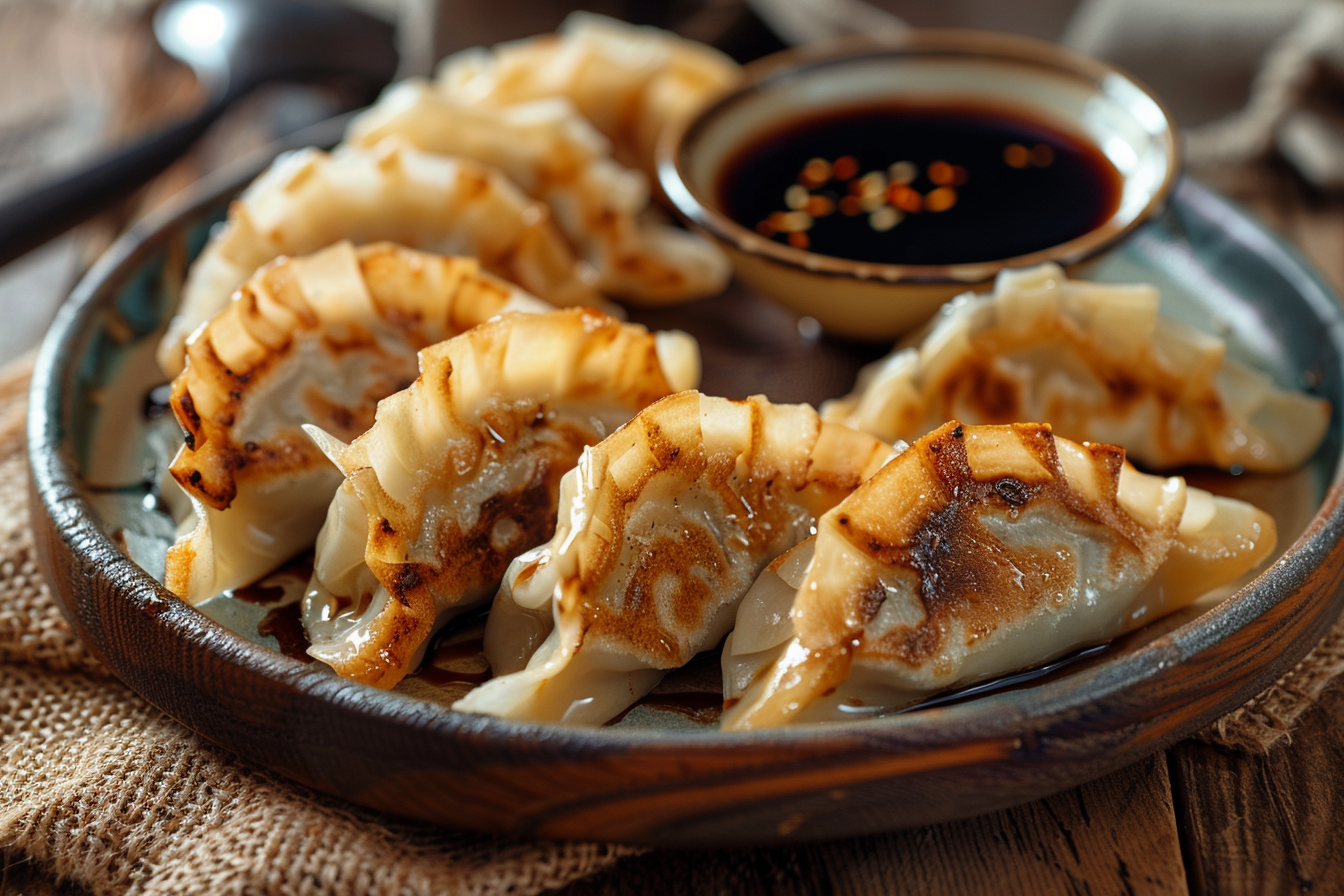
Chinese dumplings with pork and napa cabbage, with a crispy bottom and a black vinegar dip.
- Preparation
- 1 hr
- Cook/bake time
- 20 min
- Total
- 1 hr 50 min
- Difficulty
- Advanced
- Calories
Chinese dumplings with pork and napa cabbage, with a crispy bottom and a black vinegar dip.
Chinese dumplings with pork and napa cabbage, with a crispy bottom and a black vinegar dip. The napa cabbage is salted and squeezed out, otherwise it releases its water inside the dumpling and bursts it open. And the minced meat is stirred in one direction until it becomes sticky, which is the secret to its juiciness.
Two steps determine the filling. The napa cabbage is salted and squeezed out because it consists of over ninety percent water. Unsalted, it releases it inside the closed dumpling and bursts it open. And the minced meat is stirred with the cold broth in one direction until it becomes sticky: this causes myosin threads to detach from the muscle cells, form a network, and hold onto the water. This is exactly what makes the filling juicy and bouncy instead of crumbly. The dough is made with cold water because cold water leaves the gluten intact, so the wrapper remains firm to the bite and does not tear during cooking.
Mix the flour and salt, add the cold water all at once, and knead for eight minutes into a firm, smooth dough. It should be noticeably tighter than bread dough. Wrap it in plastic wrap and let it rest for thirty minutes so the gluten relaxes and it can be rolled out thinly.
Mix the finely chopped napa cabbage with the two teaspoons of salt and let it sit for fifteen minutes. Then take it in portions in your hand and squeeze the water out vigorously. A surprising amount will come out. This step is the reason why the dumplings stay sealed later.
Mix the minced meat with soy sauce, sesame oil, rice wine, sugar, ginger, and pepper, and then add the cold broth in three portions. Stir continuously in the same direction for two to three minutes until the mixture becomes noticeably sticky and tough and clings to the spoon. Only now fold in the napa cabbage and scallions.
Roll the dough into two logs, cut them into about 40 equal pieces, and roll each into an eight-centimeter circle. Make them slightly thicker in the middle than at the edges so the bottom holds up during cooking. Keep the finished wrappers under a damp cloth, as they dry out in minutes.
Place a heaping teaspoon of filling in the middle, fold the wrapper into a half-moon, and press the center firmly together. Then make three to four pleats from one side into the front edge and press each one against the back, smooth edge. The pleats are not decoration, they give the dumpling its base.
Heat two tablespoons of oil in a non-stick pan, place the Jiaozi in it with some space between them, and fry for two to three minutes until the bottom is golden brown. Pour in 80 ml of water, cover immediately, and let them steam for eight minutes. Remove the lid and let the remaining water evaporate until the bottom crisps up again. Mix the dip ingredients and serve immediately.
Cook in plenty of simmering water until they float, then add a cup of cold water twice and bring back to a boil. The classic preparation for the New Year.
Replace the meat with 300 g of firmly pressed tofu and 150 g of chopped shiitake mushrooms. Reduce the broth to 40 ml, as tofu binds less water than meat.
| Calories | 581 kcal |
|---|---|
| Protein | 29 g |
| Carbohydrates | 58 g |
| – of which sugar | 3 g |
| Fat | 24 g |
| Fiber | 4 g |
Gyoza are the Japanese evolution: thinner wrapper, finer filling, almost always pan-fried. Jiaozi have a sturdier dough and are traditionally boiled, but both work with the same technique.
Yes, and they save a lot of time. Look for round wrappers for Jiaozi, not the square ones for wontons. However, homemade ones are significantly firmer to the bite.
Usually too much water in the filling or too much filling in the wrapper. A heaping teaspoon is enough. The temptation to pack more in is the most common beginner's mistake.
Sign in to rate and comment on this recipe.
Only 1 hr 20 min of that is hands-on – the rest takes care of itself.
We add up reference values for every ingredient and divide by the number of servings. These assumptions are baked in:
A guide value, not a lab measurement: no two onions weigh the same, and fat content varies from pack to pack.