Fish-Free Fish Sauce
Fermented soybeans, seaweed, and pineapple provide that deep, salty note without a single fish in sight.
- Preparation
- 10 min
- Cook/bake time
- 25 min
- Total
- 12 hr 35 min
- Difficulty
- Easy
- Calories
Fermented soybeans, seaweed, and pineapple provide that deep, salty note without a single fish in sight. Fish sauce is indispensable in Southeast Asian cuisine and poses a real problem for vegetarians, vegans, and those with fish allergies. This version recreates its three building blocks, which are salt, glutamate, and a subtle sweetness, using entirely plant-based sources.
Why this works
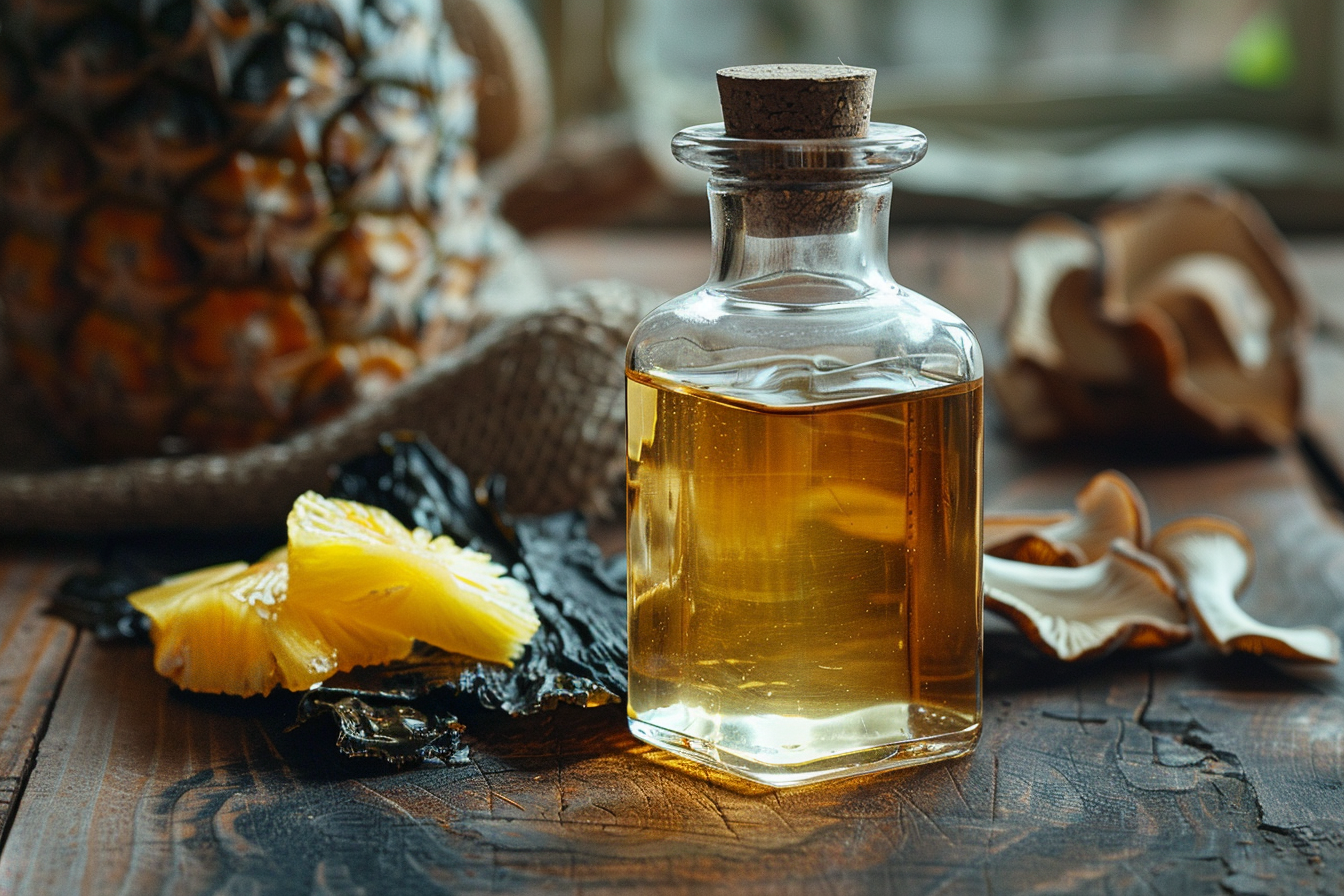
Authentic fish sauce is created when anchovies ferment in salt for months. Enzymes break down the fish protein into free amino acids, primarily glutamic acid, resulting in a liquid made of salt, glutamate, and breakdown products with a characteristic, slightly funky note. This can be recreated using three separate sources. Kombu seaweed provides glutamate in one of the highest natural concentrations available, and it is the reason why Japanese dashi works without meat. Light miso adds fermented soy protein, providing the same type of amino acid fragments as fermented fish. The pineapple not only contributes sweetness but also provides bromelain. This protein-splitting enzyme releases additional amino acids over the twelve-hour resting period.
Step-by-step instructions
- 1
Start the kombu cold
Place the kombu and shiitake in cold water and let them sit for thirty minutes. Starting cold is important for kombu: boiling water causes it to release slimy and bitter compounds, while cold steeping extracts only the glutamate.
- 2
Heat but do not boil
Slowly heat everything to about 80 °C and remove the kombu before the water boils. The shiitake can stay in the pot. Let it steep for twenty minutes over low heat without letting it bubble.
- 3
Miso, pineapple, and salt
Remove the pot from the heat, strain out the mushrooms, and stir in the miso, soy sauce, salt, sugar, and vinegar. Add the diced pineapple. The miso is intentionally added off the heat, as temperatures above 80 degrees destroy its flavor and active cultures.
- 4
Let steep for twelve hours and strain
Cover the mixture and let it sit at room temperature for twelve hours. During this time, the bromelain from the pineapple breaks down more protein into amino acids. This step is the difference between a salty broth and something that actually tastes like fish sauce. Afterward, strain it finely and refrigerate.