Sourdough Starter
Flour and water, seven days, feeding once a day, and that is all it takes.
- Preparation
- 10 min
- Cook/bake time
- –
- Total
- 168 hr 10 min
- Difficulty
- Medium
- Calories
Flour and water, seven days, feeding once a day, and that is all it takes. A sourdough starter is a culture of wild yeasts and lactic acid bacteria that already live in the flour. You do not breed them, you just give them the conditions under which they outcompete the rest.
Why this works
Yeasts and bacteria sit on every grain of cereal, including lactic acid bacteria and various spoilage germs. In the first few days, the wrong ones are in the majority, which is why a young starter often smells unpleasant. Daily feeding reverses the ratio. The lactic acid bacteria lower the pH value below 4, and hardly any other germ can tolerate this acidic environment, so the culture protects itself. Whole grain rye flour is the best starter because its bran brings the most microorganisms and the most enzymes. And the temperature determines the taste. At 26 to 28 degrees, mild lactic acid bacteria predominate, while significantly below that, acetic acid producers prevail and the dough becomes sharply sour.
Step-by-step instructions
- 1
Day 1: starting
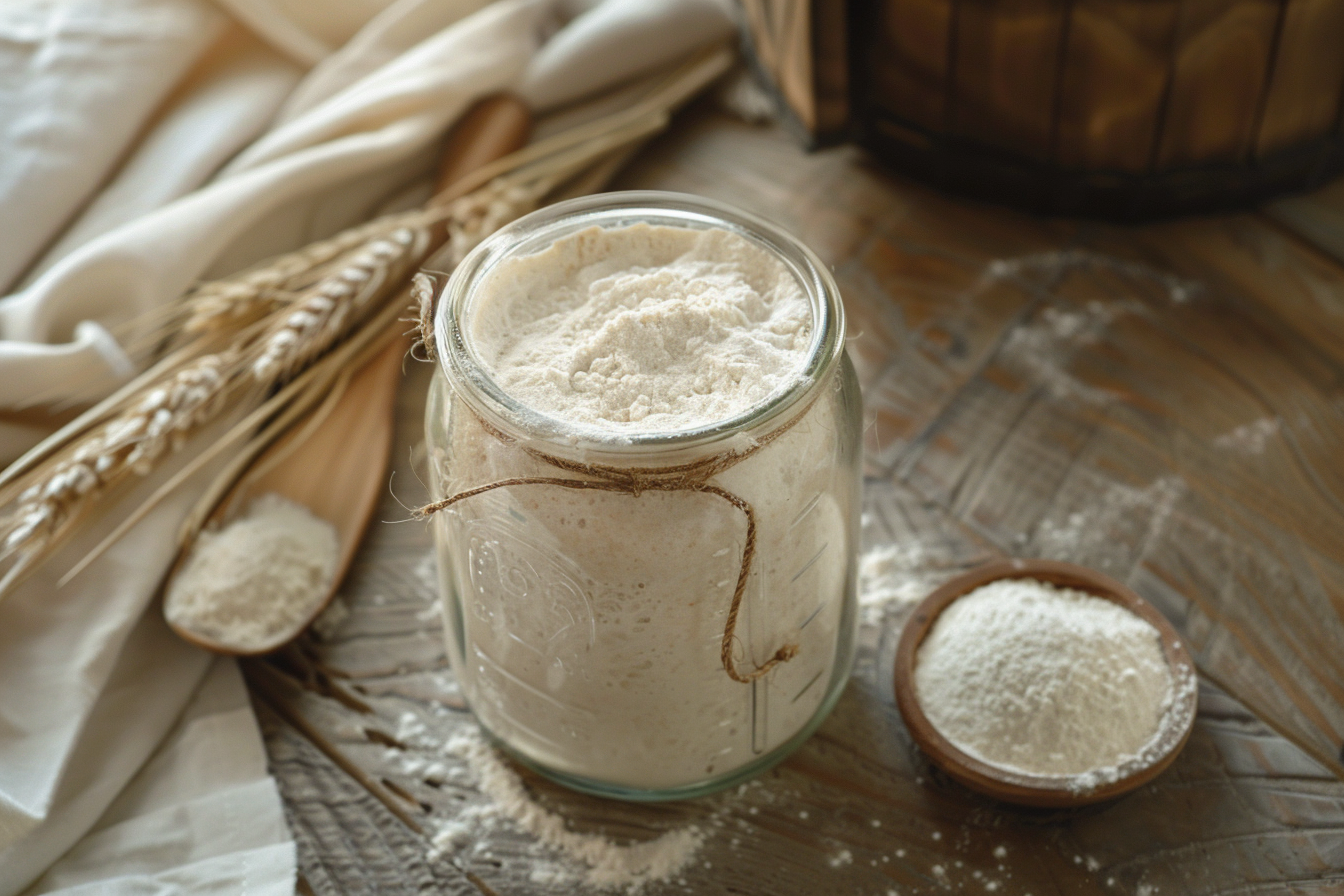
Mix flour and water in a jar to form a thick paste and cover it loosely so that air can get in but nothing falls in. Place it in a warm spot at 26 to 28 degrees, such as on top of the fridge or in the oven with the light turned on.
- 2
Day 2 and 3: first movement
Stir in 50 g of flour and 50 ml of water every day. The starter will now form bubbles and may smell strange, like cheesy feet, acetone, or wet cardboard. This is normal and will pass, as the wrong bacteria are still fighting here.
- 3
Day 4 and 5: the quiet phase
Often nothing seems to happen for two days now. Keep feeding anyway. In this phase, the ratio tips. The lactic acid bacteria lower the pH value, and the early troublemakers disappear.
- 4
Day 6 and 7: reliable rise
Now the starter should visibly double within four to six hours after feeding and smell pleasantly sour like yogurt and apple. This is the sign that it is ready, not the date.
- 5
Storage
From now on, the starter lives in the fridge and is fed once a week. Take half away, stir in 50 g of flour and 50 ml of water. Before baking, you take it out twelve hours beforehand and feed it twice so that it reaches operating temperature.
Our best tips
- Use whole grain rye flour to start, even if you want to bake wheat bread later. Its bran brings the most microorganisms and the starter gets going two days earlier.