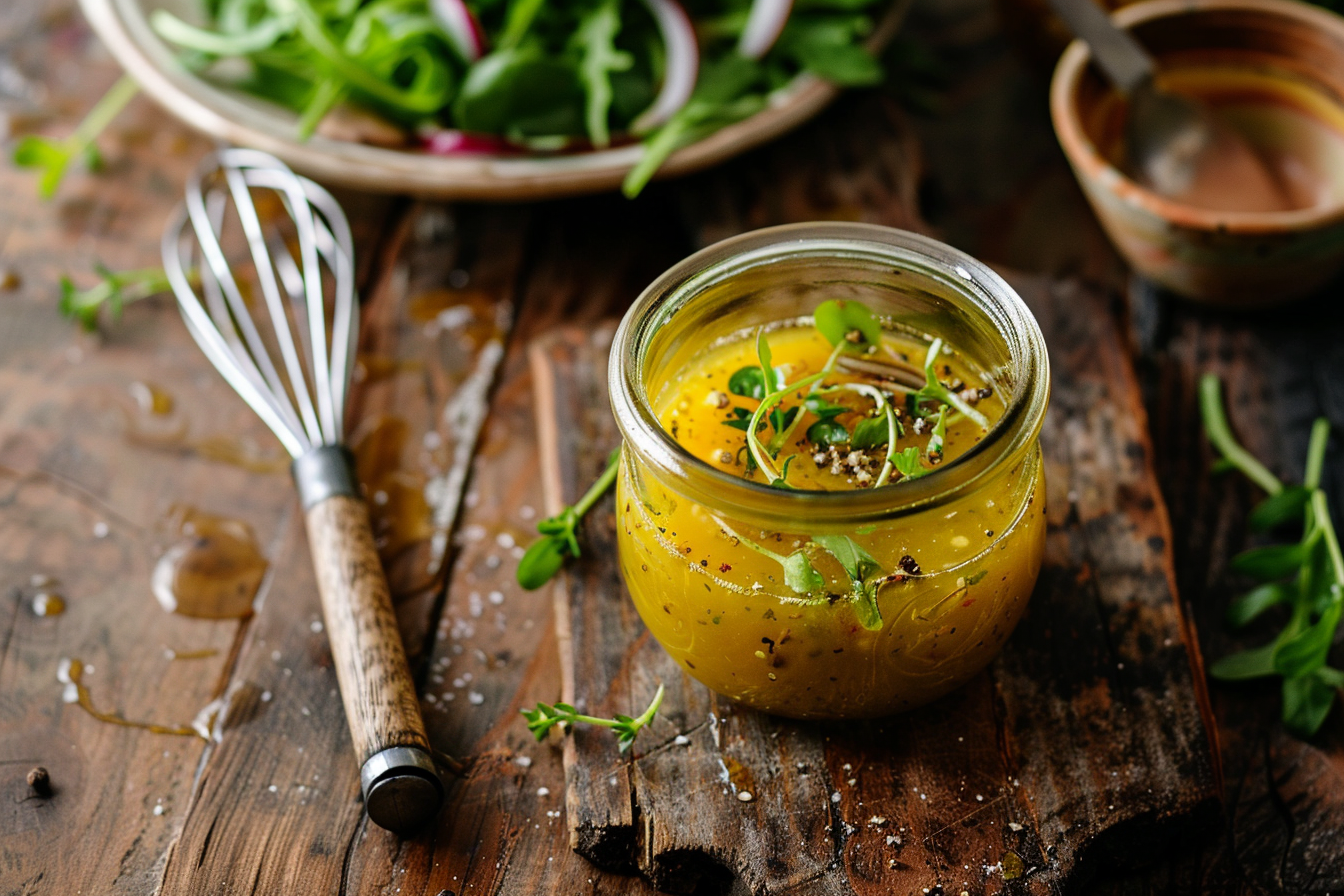
The Vinaigrette Formula
Three parts oil, one part acid, one spoonful of emulsifier, and then you choose which ones.
- Preparation
- 5 min
- Cook/bake time
- –
- Total
- 5 min
- Difficulty
- Easy
- Calories
Three parts oil, one part acid, one spoonful of emulsifier, and then you choose which ones. A vinaigrette is the most useful formula in the entire kitchen: it comes together in five minutes, lasts two weeks and saves any salad, roasted vegetable or bowl. What holds it together is not stirring, but chemistry.
Why this works
Oil and vinegar do not mix because water molecules attract each other more strongly than they attract oil molecules. Shaken together, they separate again within minutes. An emulsifier is a molecule with two ends, one of which likes water and the other fat. It wraps itself around the oil droplets and keeps them suspended. Mustard does this through its mucilage, honey through its sugar molecules, and egg yolk through lecithin. That is why there is always a spoonful of it in this formula, and that is why the ratio is three to one: less oil and the acid dominates, more and the emulsion no longer holds. The second rule is the order of operations. Salt goes into the acid first, because it does not dissolve in oil and will crunch between your teeth later.