Bread Dumplings from Stale Bread
Let them soak for twenty minutes, then stop kneading. Bread dumplings fall apart because of how they are handled, not because of the recipe.
- Preparation
- 30 min
- Cook/bake time
- 20 min
- Total
- 50 min
- Difficulty
- Medium
- Calories
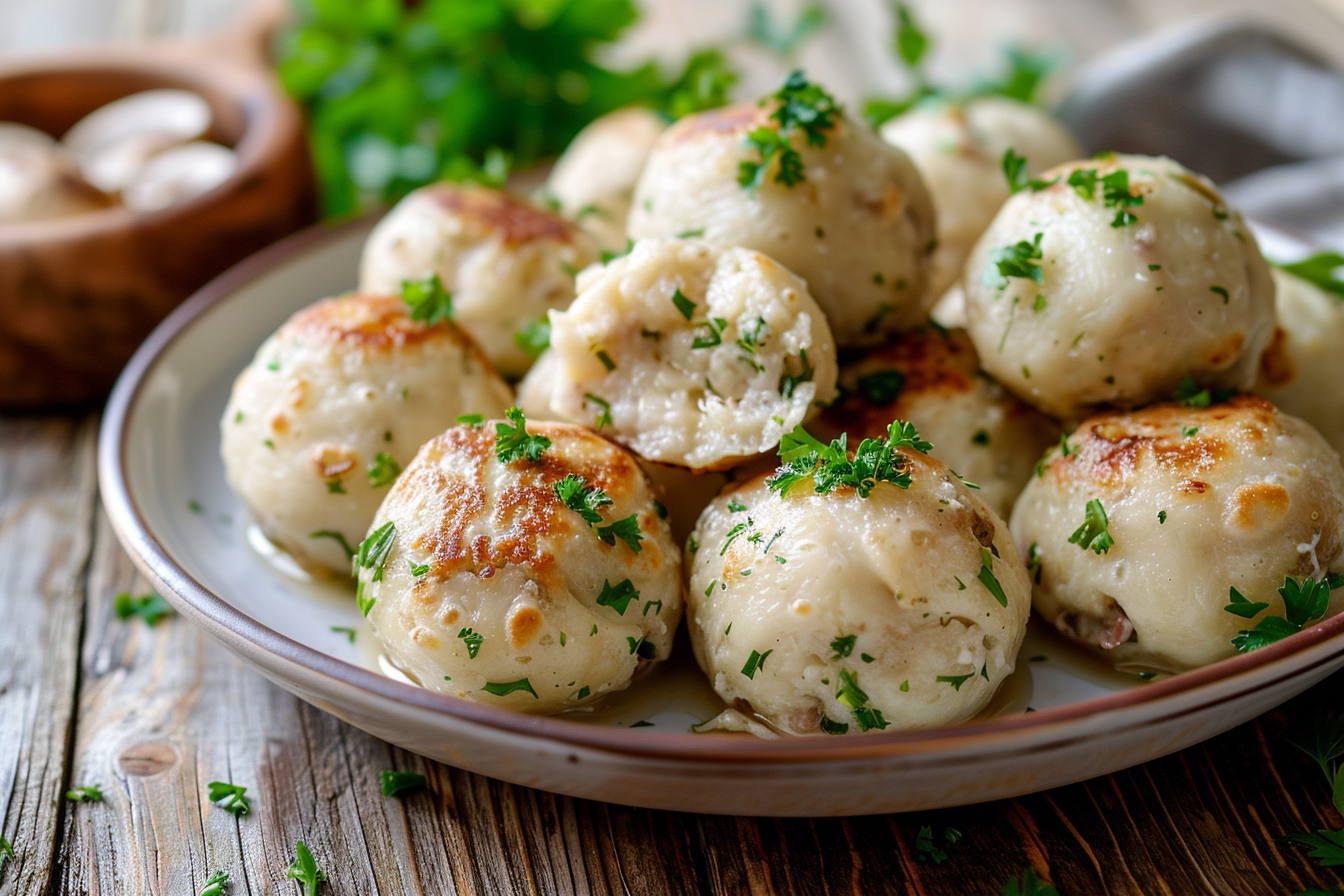
Let them soak for twenty minutes, then stop kneading. Bread dumplings fall apart because of how they are handled, not because of the recipe. Four stale rolls, warm milk, one egg: that is all it takes. What it does take is patience during soaking and a pot that simmers instead of boiling.
Why this works
A bread dumpling holds together because the protein in the egg coagulates during cooking and binds the soaked bread pieces like a net, and because the starch from the bread gelatinizes a second time. Both need contact. The milk must be completely absorbed into the bread before shaping, otherwise there will be dry pockets where the dumpling will later burst open. That is the reason for the twenty minutes. Kneading, on the other hand, is the mistake. It crushes the bread structure into a dense mass that becomes like a stone when cooked. The third rule concerns the water. Vigorous boiling moves the dumplings so much that their still soft surface tears off before the egg has set. At 90 degrees, when the water is just quivering, they stay whole.
Step-by-step instructions
- 1
Soak the bread
Cut the bread into small cubes and pour the lukewarm milk over them. Let them soak for twenty minutes, folding them over once in between. Lukewarm, not hot. Hot milk would immediately gelatinize the starch and seal the cubes on the outside.
- 2
Sweat the onions
Sweat the diced onion in butter for five minutes until translucent and let it cool briefly. Added hot to the mixture, they would cause the egg to set before it can do its binding work.
- 3
Mix, do not knead
Add eggs, onions, parsley, salt and nutmeg and mix everything loosely with your hands. Do not knead. That crushes the bread structure into a dense mass, and that turns into a stone when cooked. If the mixture is too wet, a tablespoon of breadcrumbs will help.
- 4
Shape and let simmer
Shape eight dumplings with wet hands and place them in gently simmering salted water. It should quiver, not boil. Let them simmer uncovered for twenty minutes. They will rise to the surface after a few minutes, which is normal and not a sign of doneness.
Our best tips
- Soak for twenty minutes, not five. Dry pockets inside are the most common cause of dumplings bursting in the pot.